
But I already know that!

Have you ever wondered why you are not getting the healing that is needed?

Well—maybe you’ve fallen into the “But I already know that!” trap!

What do I mean?

Let me explain.

When I was a professional composer and pianist, I had two categories of students—those who followed instructions and those who didn’t.  These categories had nothing to do with whether they were already professional musicians, were striving to attain that level, or were amateurs simply studying piano for their own enjoyment.
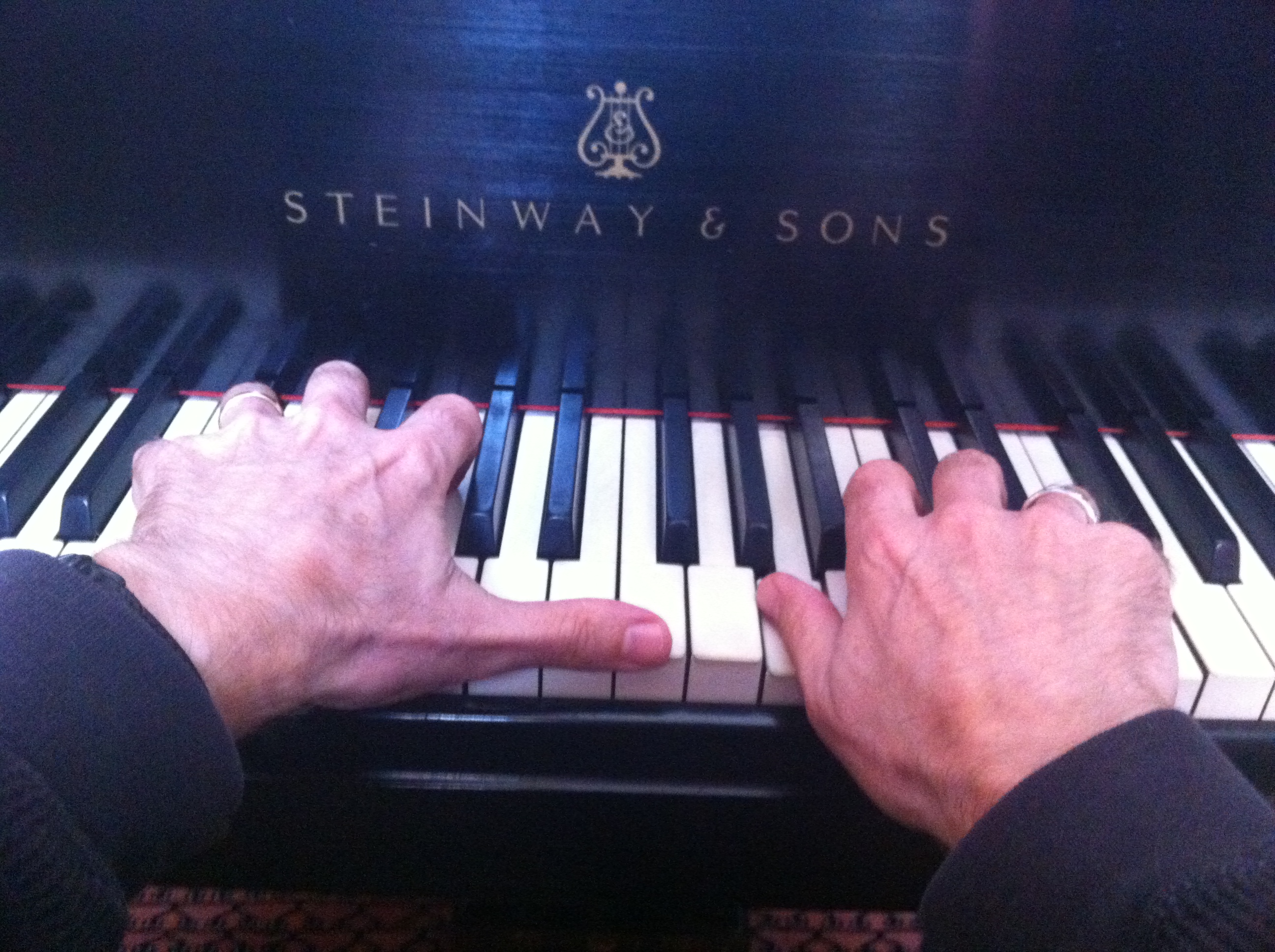
I taught all of them a particular methodology for making their practice sessions and their subsequent performances at lessons or in public fruitful.  These practice techniques were based on principles of mental clarity.  Many students obediently followed these and saw the strong results of doing so.  But others pursued the more common practice approach of what can only be described as hours of mindless repetition in which they hoped to achieve the same results by sheer dint of that repetitive effort.  The term for the latter is “muscle-memory training,” and it’s an approach that I refuse to give any credence to since muscles simply have no memory.

When it came time for this latter group of students to perform—a situation that can very easily be stressful—their belief in muscle-memory quickly fled them and they would make mistakes on the very passages that they had spent so much time practicing.  Aghast at their errors, they would afterward assure me that they really did know the material and couldn’t understand why they had failed. They would then immediately attempt to convince me of their assertion by diving right into repetitively playing the passage in question and proceed to hit the same proverbial “stone wall” over and over again.

What did I do?

I stopped them in their tracks and made them mentally examine every detail of the music—pitches, rhythms, fingerings, etc.  I then required them to voice aloud these elements in a steady tempo.  Invariably, the error in their thinking—the specific stumbling block—would be exposed.  Once corrected mentally—once they really understood what the music was requiring of them, and without any intervening practice—they would immediately play the passage flawlessly.

So what happened here?

Mental clarity is what took place and once achieved, their fingers could do nothing else but reproduce the correct ideas that the music demanded.

Are you beginning to see a connection to Christian Science healing?

I’ve had dear, dedicated Christian Scientists tell me immediately after my sharing with them an important metaphysical healing truth from the Bible or from Mary Baker Eddy’s writings, that they already knew it.  And some of them actually completed the quotation before I’d finished saying it!  Yet these same folks were not achieving a healing.  Why would this have happened?

It seems to me that just like those errant piano students, they’d fallen into a trap of error—a gaping hole which had deluded them into thinking that understanding the truth is static.  Such a delusion would try to convince them that because they were once healed by grasping a particular spiritual idea, they no longer needed to delve even more deeply into it to gain an understanding of greater profundity.  An understanding that would in fact free them of whatever lie was attempting to engulf their experience.

Isn’t this type of thinking—of clinging to the surface and unthinkingly repeating an idea—similar to reciting a mantra over and over again and expecting that doing so will bring healing and spiritual progress?  How can this be anything short of self-hypnosis—of mesmerism—which is inherently detrimental, and indeed, opposed to spiritual progress, health, and well-being?

Just like those piano students who gained a deeper understanding of the music and demonstrated it by their successful performances, doesn’t our ongoing demonstration of healing prove the evolving depth of our understanding of the Allness of God and of the present perfection of His image and likeness, man?

Mrs. Eddy wrote (Science and Health, p. 313):

Jesus of Nazareth was the most scientific man that ever trod the globe. He plunged beneath the material surface of things, and found the spiritual cause.

As followers of Jesus and as Christian Scientists, can we really expect that anything less is required of us?

So, whether it’s a tune or the truth, less repetition and more understanding always brings blessings!  Remember, the first page of Science and Health states:

The time for thinkers has come.

Appealing to humanity

OK—here’s a tough question and one that we may not want to look at.  But it needs to be asked.

Are some of our fellow Christian Scientists buying into the media’s assertion that people—the public-at-large—are no longer interested in hearing about religion, spirituality, or even God?

Unfortunately, I think the answer is “yes.”  These same well-meaning folks propose solutions that range from attempting to gain an audience with the public via various other doors to throwing up their hands in hopelessness.

Now while it may be true that our country is moving towards secularism, it certainly isn’t true that Americans aren’t interested in God—not when a 2011 Gallup survey indicates that more than 9 out of 10 of our fellow countrymen profess a belief in the Supreme Being.

I’m not naïve enough to think that such a figure indicates that all is well and that we can rest on our proverbial laurels.  Obviously not—given the diminishing church attendance in our and many other denominations.  But it does raise some serious questions for me—and I hope for you, also.

Regardless of Gallup’s and any other survey, if we accept the position that people are not interested in God, aren’t we inherently accepting a falsehood—a faulty premise—that attacks the very basis of Christian Science theology?

What am I talking about?

Isn’t acquiescing to such a position actually denying the very nature of man as the image and likeness of God and of man’s indestructible relationship to his/her all-loving Father-Mother God?

And by doing so, aren’t we subtly working against our fellow men and women by reinforcing a lie about them—a lie that claims they are not interested in Spirit, in God?

I wonder if this approach isn’t exactly how error—at such a crucial time in humanity’s development—would try to lead us astray.  How?  By following a path that would seek to confuse mankind about, as well as deprive them of, the supreme import of the Science of the Christ in every aspect of their lives—to the very real and tangible blessings that await them?

Mary Baker Eddy wrote: “There is but one real attraction, that of Spirit.” (Science and Health, p.102).

Can we afford to deny or forget this foundational fact by our acts and methods, and then wonder why we and our churches are feeling marginalized?

Let’s take a deep inward look and be honest here: if we are not out with our fellow men and women offering them a “cup of cold water” as Jesus and Mary Baker Eddy expected and required of us, who do we have to blame for any marginalization but ourselves?

And from what I’ve seen, that cup necessarily includes healing our neighbor—thereby proving the practical blessing that Christian Science offers to all.  Take a moment and think about your own lives and the impact that being healed has had on you.  Nothing substitutes for it.  Nothing speaks as strongly.

Eddy wrote in her Miscellaneous Writings (p. 252):

Christian Science is not only the acme of Science but the crown of Christianity. It is universal. It appeals to man as man; to the whole and not to a portion; to man physically, as well as spiritually, and to all mankind.

There it is my friends—the universal appeal of Christian Science is to all mankind!

Alertness

We live in a time of unprecedented “connectedness” throughout most of the world.  Never before in history has humanity had access to the plethora of ideas, philosophies, opinions, medical hypotheses, religious and non-religious views that a simple “click” on the Internet or a cable TV remote will nearly instantly provide.

There’s no doubt that this wealth of information can provide a richness to our understanding of the world we live in.

But, as Christian Scientists, what’s our responsibility toward this constant input of views?  Obviously, we need to be praying about the challenges that our world faces.

However, what about ourselves?  Is this influx in any way adversely affecting us?

Mary Baker Eddy wisely counseled Christian Scientists about the importance of watching and praying—about the need to be alert and awake:

The members of this Church should daily watch and pray to be delivered from all evil, from prophesying, judging, condemning, counseling, influencing or being influenced erroneously. (Church Manual, p. 40)

Given her statement, can we risk thinking that it is not of paramount importance to pay attention to the flood-tides of information being presented to our thought?

Remember, Jesus told his followers:

16  Behold, I send you forth as sheep in the midst of wolves: be ye therefore wise as serpents, and harmless as doves. (Matthew 10:16)

The Master was clearly aware of the need to be alert and not fall into the traps that evil—error, the carnal mind, mortal mind—would lay for us.  And it is the alertness and awareness of spiritual discernment—sourced entirely in God—that lifts us above those pitfalls.  That keeps us from being erroneously influenced.

If Christian Science is the Science of Being—and it is—then we need to be very clear as to what that means, and who we are as Christian Scientists.  How can we heal effectively—based solely on the principles of Christian Science—if we are letting other forms of religious and secular philosophies enter unchallenged into our thinking?  And since healing is at the core of this religion, we can’t afford to be naïve in any way to the strong attempts of error to try to encroach on our thought with suggestions such as: “This sounds very similar.” Or “Meditating is just like prayer.”  Or “Look, they believe in God, too!”

I understand that, to a certain degree, all of these may appear to be true—but sounding or looking similar, does not make them the same as Christian Science.

We need to ask ourselves:  Are we inadvertently seeking validation—as if healing the sick and reforming the sinner weren’t enough—by trying to find alignment with a variety of very different philosophies?  Philosophies which may even be diametrically opposed to the foundations of Christian Science—philosophies such as New Age thought, psychology, mindfulness, and Buddhism, to name a few.

Let’s not kid ourselves here!  There is no connection or similarity to Christian Science with any of these.

Eddy wrote in The First Church of Christ, Scientist and Miscellany (p. 119):

Think not that Christian Science tends towards Buddhism or any other “ism.” Per contra, Christian Science destroys such tendency.

Strong words, indeed!  Nevertheless, essential.

Because our Bible Lessons frequently cite one or both of the following sentences from Science and HeaIth (p. 249), I think that we’re all familiar with them:

Let us feel the divine energy of Spirit, bringing us into newness of life and recognizing no mortal nor material power as able to destroy. Let us rejoice that we are subject to the divine “powers that be.”

But are we equally familiar with the one that immediately follows these healing truths?

Any other theory of Life, or God, is delusive and mythological.

We might feel a little uncomfortable with the clarity and directness of this statement—especially in light of today’s cultural atmosphere in which every philosophy, regardless of its intent, is promoted, admired, and respected.

Yet it comes down to this: if we are truly striving to be followers of Jesus and Mary Baker Eddy, we don’t get to pick and choose which aspects of Truth we’re going to accept.  It needs to be the whole, seamless cloth.

The success of our healing work—and our Church’s forward movement, as well as the salvation of mankind—depend on it.

Working out our salvation

In his Epistle to the Philippians (2:12,13), Paul wrote:

12  Wherefore, my beloved…work out your own salvation with fear and trembling.

13  For it is God which worketh in you both to will and to do of his good pleasure.

This imperative statement for each of us to work out our salvation—while fully understanding that it is God who is at once impelling us to do so and actually doing the action—is deeply profound in and of itself.

But a question arises: “What is our responsibility to our neighbor?”

Jesus’ answer is a direct command to all of his followers—for all time:

Heal the sick, cleanse the lepers, raise the dead, cast out devils. (Matthew 10:8)

Each of these is loving our neighbor—the Master’s Second Great Commandment.  Let’s face it—there is no wiggle room here.  If we’re to call ourselves Christians—let alone Christian Scientists—this is our responsibility.

And, as I’ve come to see, healing others is a requirement, necessity, and privilege that is part and parcel of working out our salvation.  It’s as essential to being a Christian as is loving God—the First Great Commandment.  In fact, we can’t obey one without obeying the other!

I’ve often asked myself, how did a concept that caused some members of The First Church of Christ, Scientist, to be healers while others were not, or thought that they didn’t need to be, come about?  Isn’t being a Christian Scientist synonymous with being a public healer?  To be clear here, I’m not talking about being a professional healer, necessarily, but about being willing to heal others and doing so.

In Mary Baker Eddy’s Message to The Mother Church, 1901 (p. 15), she stated:

The Christian Scientist has enlisted to lessen sin, disease, and death…

That’s what we’re called upon to do. And make no mistake; this lessening is not just about ourselves, our family members, or our fellow Christian Scientists!  And it’s not simply praying about the issues that humanity faces—as important and as necessary as that is.  No, it’s about offering to pray for our neighbor—to “Give them a cup of cold water in Christ’s name…” (Science and Health, p. 570).  And the opportunities for doing so are abundant.  Just listen to nearly any conversation that you encounter—it eventually, if not immediately, turns to someone’s health or personal problems.

In referring to those sacred and absolute commands of Jesus, Mrs. Eddy wrote (Science and Health, p. 37):

When will Jesus’ professed followers learn to emulate him in all his ways and to imitate his mighty works? Those who procured the martyrdom of that righteous man would gladly have turned his sacred career into a mutilated doctrinal platform. May the Christians of to-day take up the more practical import of that career! It is possible, — yea, it is the duty and privilege of every child, man, and woman, — to follow in some degree the example of the Master by the demonstration of Truth and Life, of health and holiness. Christians claim to be his followers, but do they follow him in the way that he commanded? Hear these imperative commands: “Be ye therefore perfect, even as your Father which is in heaven is perfect!” “Go ye into all the world, and preach the gospel to every creature!” “Heal the sick!”

Can we honestly think that there’s a way to work out our salvation that wouldn’t include healing others?

Impersonal

Mary Baker Eddy’s ordination of two books—the Bible and Science and Health with Key to the Scriptures—to be the impersonal pastor for the Church of Christ, Scientist was clearly inspired.  It removed the “middle-man” of a clergy interpreting those two sacred texts and allowed for each individual to hear the specific divine inspiration that would meet their needs.  I’ve always loved that idea and have been blessed by it over and over again.

But I think that sometimes the idea of “impersonal” has been taken too literally in terms of the manner—the method—for the actual reading of the inspired words of those books by the lay readers in Christian Science churches.

I vividly remember my first experiences in attending branch church services.  My previous wife, Margaret, who introduced me to Christian Science, took me to a local church during our courtship.  I had just started reading Science and Health and was aflame with the revolutionary spiritual ideas that the book contained.

You can imagine my sense of disconnect when I heard the two Readers read these words—these words that were beginning to mean so much to me and were beginning to alter my life—in a monotone, lifeless manner!  I just couldn’t understand it.  How could they not feel the impact of those statements?  How could they not express the spiritual power that the citations from each book conveyed?

I kept attending services, but felt no inspiration from doing so.  I finally asked Margaret how this style of reading could be.  She very innocently replied that the Readers—particularly the First Reader—were chosen because they were the two most spiritually-minded individuals in that church and read this way because it was spiritually impersonal.

As a newcomer to Christian Science, this simply made no sense to me and I told her so.  After a while, I could no longer endure going there—so morose was the feeling that I felt my growing understanding was being impeded.  I told her that I would simply continue to study Christian Science on my own.  My dear one suggested we attend The Mother Church, which we did, and the Readers there, to my great delight and relief, read with understanding, vitality, conviction—and authority.  An authority that imparts healing!

I never looked back and became a member a little over a year later.

Now, why am I telling you all this?  Though there has been some improvement in branch churches in my state—which I am grateful to see—there are enough of our Readers who, 22 years down the line, simply don’t get it.  They continue to read in the most uninspired fashion.

How could this be?  It seems to be a cultural tradition to do so.  And a tradition that, frankly, doesn’t have any spiritual foundation to stand on.

Isn’t it about time that we get something straight here? Impersonal doesn’t mean that we shouldn’t be inspired.  Quite to the contrary: it indicates that we’re listening to how God is imparting the meaning of those words—His words—to us and recognizing that it is God who is causing us to express them fully.  Jesus said “I can of mine own self do nothing.” (John 5:30)  How can it be any different for us?

Can we actually imagine Jesus, or Mary Baker Eddy, reading the Scriptures in any way other than profoundly meaningfully and with the full authority of Christianly scientific healing as its intent?  Can we imagine them engaging with others in any way other than with a deep, potent spirituality—a spirituality that heals, uplifts, regenerates, and transforms all who are hearing?

Mrs. Eddy wrote (Science and Health, p. 366: marginal note “Genuine healing”):

If we would open their prison doors for the sick, we must first learn to bind up the broken-hearted. If we would heal by the Spirit, we must not hide the talent of spiritual healing under the napkin of its form, nor bury the morale of Christian Science in the grave-clothes of its letter. The tender word and Christian encouragement of an invalid, pitiful patience with his fears and the removal of them, are better than hecatombs of gushing theories, stereotyped borrowed speeches, and the doling of arguments, which are but so many parodies on legitimate Christian Science, aflame with divine Love.

It is the spiritual import of those texts,“aflame with divine Love”—not just the letter—that brings genuine healing!

Shouldn’t that be the manner of reading in our services?